

Complete System Component Architecture
System Architecture Description
Cora Alert integrates seven core technology components into a unified campus safety platform. Each component is designed for seamless interoperability while maintaining independent operational capability for maximum reliability.
Core System Components

Infrastructure Layer
-
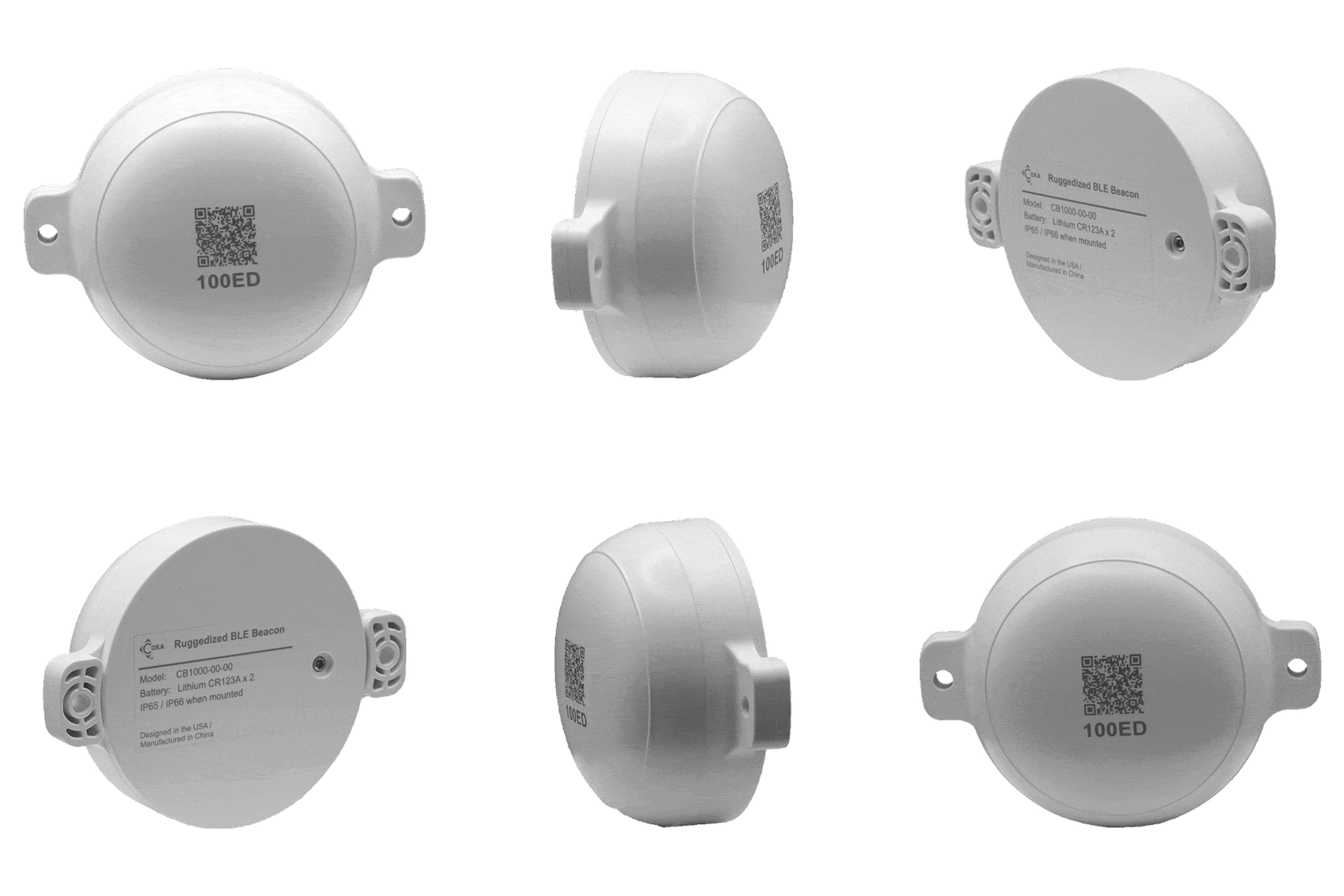
BLE Beacons: CB1000 and CB1020 ruggedized beacons for precise indoor / outdoor location
-
LoRaWAN Gateways: Private network infrastructure providing campus-wide coverage
-
Cora Alert Cloud Services: Powered by Codepoint CP-Flex CloudStack for enterprise reliability

Integration Layer
-
Emergency Integrations: SMS, E911, Direct Messaging, and Email notification systems
-
System Data Flow
.png)
Device Layer
-
Alert Locators: Staff and Visitor editions with Smart Scan Technology
-
Alert Mobile App: Native iOS and Android applications for responders
-
Alert Panel App: Proprietary desktop panels running kiosk alert interface
%201.png)
Emergency Alert Sequence:
-
Alert Initiation: Staff activates Alert Locator device
-
Location Detection: Smart Scan Technology identifies precise location via BLE beacons
-
Network Transmission: LoRaWAN gateway transmits encrypted alert to cloud services
-
Processing & Intelligence: CP-Flex CloudStack processes alert with AI-powered incident analysis
-
Multi-Channel Notification: Simultaneous alerts via Mobile Apps, Alert Panels, SMS, and E911
-
Response Coordination: Real-time tracking and communication through application interfaces
Architecture Benefits

Unified Platform: All components designed for seamless integration and data sharing
Redundant Systems: Multiple communication paths ensure reliability during emergencies
Scalable Design: Add components incrementally without system redesign
Open Integration: APIs enable connection with existing school safety and communication systems


Network Infrastructure & Deployment
Private LoRaWAN Network Architecture
Cora Alert integrates seven core technology components into a unified campus safety platform. Each component is designed for seamless interoperability while maintaining independent operational capability for maximum reliability.

Coverage & Performance:
Range: Up to 1,000 ft from single gateway with clear line of sight
Network Type: Private LoRaWAN (868/915 MHz ISM bands)
Latency: Sub-second message delivery under normal conditions
Capacity: Support for 1,000+ Alert Locators per gateway
Reliability: 99.5%+ message delivery success rate

Infrastructure Requirements:
Gateway Placement: Typically 1-3 gateways per campus depending on layout
Power Requirements: Standard PoE+ or 12V DC power supply
Internet Connectivity: Minimum 1 Mbps dedicated bandwidth
Installation Timeline: Professional installation, deployment teams plan, deploy, and test installed equipment.

Network Architecture Benefits
Independent Operation: No reliance on Wi-Fi or cellular networks
Interference Resistant: ISM band with adaptive frequency selection
Future-Proof: Expandable without infrastructure replacement
Security: End-to-end encryption with rotating security keys

Deployment Considerations

Site Survey Process:
-
RF propagation analysis and gateway placement optimization
-
Integration planning with existing network infrastructure
-
Beacon placement strategy for optimal location accuracy
-
Staging and testing protocol before full deployment

24/7 System Monitoring:
-
Continuous Health Oversight: Real-time monitoring of all network components
-
Proactive Alerting: Automated notifications before issues become critical
-
Remote Configuration: Updates and adjustments without on-site visits
-
Performance Analytics: Detailed coverage, usage, and reliability reportin

Operational Advantages:
-
Redundant Coverage: Multiple gateways eliminate single points of failure
-
Minimal Infrastructure: Leverages existing network connections and power
-
Scalable Growth: Add coverage incrementally as campus needs expand
-
Independent Operation: Functions when Wi-Fi/cellular networks fail
Alert Locator Technology
Smart Scan Technology for Precision Location
Feature
Cora Alert
Industry Standard

Equipment Lifespan
Charging Cycle
Location Technology
Beacon Performance
Form Factor
5+ Years
1+ Year
Smart Scan
3 Hz Optimal
Thinnest/Lightest
1-2 Years
Monthly
Standard BLE
1-2 Hz
Years 1-2
Advanced Location Capabilities
Smart Scan Technology™ (Proprietary) Proprietary Signal Optimization Engine:
-
Intelligent Signal Analysis: Advanced algorithms continuously evaluate BLE and WiFi signal quality in real-time
-
Optimal Beacon Selection: Automatically identifies and prioritizes the strongest, most reliable signals for location determination
-
Adaptive Scanning Protocol: Dynamically adjusts scanning frequency and power consumption based on environmental conditions
-
Multi-Technology Fusion: Seamlessly combines BLE and WiFi positioning data for superior accuracy and reliability

Technical Differentiation:
-
Proprietary Algorithm: Exclusive Cora Alert technology only available in Codepoint devices.
-
Real-Time Optimization: Continuous learning system adapts to campus-specific signal patterns
-
Future-Proof Design: Software-based optimization enables ongoing performance improvements via over-the-air update

Device Management
-
Staff Mode: Privacy-protected, tracking positioning only during incidents
-
Visitor Mode: Continuous tracking for security accountability
-
Configurable Alerts: Customizable button patterns for different incident types and groups.
-
Remote Updates: Over-the-air firmware and configuration management

.webp)
Application Platform
Multi-Platform Applications with AI Intelligence
01
Alert Panels
(Fixed Installations)
-
Desktop/Wall Mount: Main offices and security stations
-
Real-Time Display: Live campus status and incident tracking
-
Interactive Maps: Visual location display on familiar campus layouts
-
Administrative Control: Complete system management capabilities
02
Mobile Applications (iOS/Android)
-
Responder Apps: Real-time tracking for on-the-go response teams
-
Role-Based Access: Different interfaces for staff, administrators, first responders
-
Push Notifications: Instant alerts with location and incident details
-
Offline Capability:Essential functions work without network connectivity
03
Web Portal (Administrative)
-
Multi-Site Management: Centralized control across entire district
-
User Management: Role-based permissions and access controls
-
Reporting Dashboard: Incident analysis and system performance metrics
-
Integration Hub: Connect with existing school and emergency systems
04
Real-Time Analysis
-
Incident Summarization: AI analyzes multiple alerts for priority response
-
Pattern Recognition: System learns campus behaviors for improved efficiency
-
Resource Optimization: Intelligent routing of response personnel
-
Predictive Insights: Identify trends for proactive safety improvements

Cloud Infrastructure & Integration
Enterprise-Grade Cloud Services
Cloud Platform Architecture
Core Services
-
Administrative Console: Centralized management and monitoring
-
Data Analytics: Comprehensive reporting and trend analysis
-
User Management: Role-based access and permission controls
-
System Health Monitoring: Proactive maintenance and optimization
Security & Compliance
-
Enterprise Encryption: All data transmission secured with militarygrade protocols
-
FERPA Compliance: Meets educational privacy requirements with automatic data purging
-
Access Controls: Multi-factor authentication and role-based permissions
-
Audit Trails: Complete logging for compliance and incident analysis
Integrations
-
e911 Systems: Automatic first responder notification with precise location
-
Email/SMS Platforms: Multi-channel alert distribution
API Platform
-
RESTful APIs: Standard interfaces for custom integrations
-
Webhook Support: Real-time event notifications to external systems
-
Data Export: Standardized formats for reporting and analysis
-
Custom Development: Professional services for specialized integrations

Technical Specifications
Complete Technical Documentation

Network Infrastructure
Gateway Requirements: Standard ethernet or cellular backhaul
Coverage Planning: Site survey tools and coverage calculators
Bandwidth Usage: Minimal data requirements for emergency communications
Integration Points: Standard network protocols and security requirement

Locator Environmental Specification
Operating Conditions: -20°C to +60°C temperature range
Durability Rating: IP67 waterproof and ruggedized construction
Installation Requirements: Minimal infrastructure modifications needed
Maintenance Schedule: Configurable daily health checks and 5+ year equipment lifecycle


Performance Metrics
System Performance
Response Time: Nearly instantaneous (1 to 2 seconds) alert transmission and processing
Location Accuracy: Room-level precision throughout campus areas
Network Uptime: 99.9% availability with redundant coverage
Scalability: Support for thousands of users across multiple sites
Battery Performance
Alert Locators: 1+ year operation between charges
BLE Beacons: 5+ year battery life with remote monitoring
Charging Infrastructure: Standard USB-C charging stations
Power Management: Intelligent power optimization extends operational life
Implementation Planning
Deployment Planning & Support

Phase 2:
Installation & Configuration (Weeks 2-3)
Gateway Deployment: Professional installation during school hours
Beacon Network: Complete indoor/outdoor positioning infrastructure
System Configuration: Custom settings for campus-specific needs
Integration Setup: Connect with existing school and emergency systems
-min.jpg)
Phase 1:
Assessment & Planning (Week 1)
Site Survey: RF analysis and gateway placement planning
Coverage Design: Optimal beacon placement for complete coverage
Integration Planning: Existing system compatibility assessment
Timeline Development: Customized deployment schedule
-min.jpg)
Phase 3:
Testing & Training (Week 4)
System Validation: Complete end-to-end testing and verification
Staff Orientation: Simple 30-minute training for administrators
Response Procedures: Integration with existing emergency protocols
Go-Live Support: Dedicated support during initial deployment period
Technical Decision Support


Technical Support: 24/7 monitoring with proactive issue resolution
System Maintenance: Remote diagnostics and over-the-air updates
Expansion Planning: Scalable growth as district needs evolve
Performance Optimization: Continuous improvement and enhancement
-min.jpg)
.png)